CAS Number 111470-99-6, Amlodipine Besilate or Amlodipine Besylate USP BP Ph Eur EP Grade Manufacturers Exporters
 ------


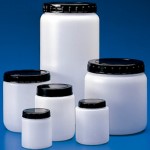
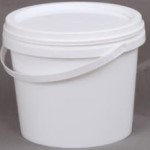
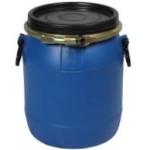
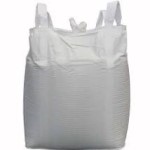
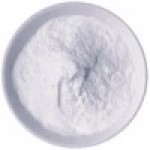
CAS Number 111470-99-6, Amlodipine Besilate or Amlodipine Besylate Manufacturer Exporter
For Properties Specifications of Amlodipine Besilate or Amlodipine Besylate Click Properties, Specifications of Amlodipine Besilate or Amlodipine Besylate Manufacturer.
For Uses of Amlodipine Besilate or Amlodipine Besylate Click Uses of Amlodipine Besilate or Amlodipine Besylate Manufacturer.
For For SDS MSDS Sheet of Amlodipine Besilate or Amlodipine Besylate Click SDS Safety Data Sheet MSDS Sheet of Amlodipine Besilate or Amlodipine Besylate Manufacturer.
The Properties and Specifications of Amlodipine Besilate or Amlodipine Besylate:
Amlodipine Besylate USP Grade Specifications:
C20H25ClN2O5-C6H6O3S --- 567.05
3,5-Pyridinedicarboxylic acid, 2-[(2-aminoethoxy)methyl]-4-(2-chlorophenyl)-1,4-dihydro-6-methyl-, 3-ethyl 5-methyl ester, (±)-, monobenzenesulfonate.
3-Ethyl 5-methyl (±)-2-[(2-aminoethoxy)methyl]-4-(o-chlorophenyl)-1,4-dihydro-6-methyl-3,5-pyridinedicarboxylate, monobenzenesulfonate CAS 111470-99-6
Monohydrate 585.07
UNII: 864V2Q084H
UNII: 1J444QC288
Amlodipine Besylate is anhydrous or hydrated and contains not less than 97.0 percent and not more than 102.0 percent of C20H25ClN2O5-C6H6O3S, calculated on the anhydrous basis.
Packaging and storage: Preserve in tight containers, protected from light. Store at room temperature.
Labeling: Where it is the hydrated form, the label so indicates.
Identification:
A: Infrared Absorption.
B: The retention time of the major peak in the chromatogram of the Assay preparation corresponds to that in the chromatogram of the Standard preparation, as obtained in the Assay.
Optical rotation: between -0.10° and +0.10°, measured at 20°.
Test solution: 10 mg per mL, in methanol.
Water Determination: not more than 0.5% for the anhydrous form. If labeled as the hydrated form, the limit is between 3.1% and 5.0%.
Residue on ignition: not more than 0.2%.
Related compounds and Assay: To pass the chromatographic test.
Amlodipine Besilate BP Ph Eur Grade Specifications:
C26H31ClN2O8S --- 567.1 --- CAS 111470-99-6
Action and use: Calcium channel blocker.
DEFINITION
3-Ethyl 5-methyl (4RS)-2-[(2-aminoethoxy)methyl]-4-(2-chlorophenyl)-6-methyl-1,4-dihydropyridine-3,5-dicarboxylate benzenesulfonate.
Content: 97.0 per cent to 102.0 per cent (anhydrous substance).
CHARACTERS
Appearance: White or almost white powder.
Solubility: Slightly soluble in water, freely soluble in methanol, sparingly soluble in anhydrous ethanol, slightly soluble in 2-propanol.
IDENTIFICATION
Infrared absorption spectrophotometry
TESTS
Optical rotation: -0.10° to + 0.10°.
Dissolve 0.250 g in methanol and dilute to 25.0 mL with the same solvent.
Related substances: To pass the test by Liquid chromatography.
In an airtight container, protected from light.
Amlodipine Besilate or Amlodipine Besylate is also manufactured in EP Grade.
The Uses of Amlodipine Besilate or Amlodipine Besylate:
Amlodipine Besilate or Amlodipine Besylate is used in pharmaceutical indusrty. Amlodipine Besylate is a prescription calcium channel blocker medication primarily used to treat high blood pressure (hypertension) and to prevent chest pain (angina) caused by coronary artery disease.
The MSDS-SDS Hazard Statement of Amlodipine Besilate or Amlodipine Besylate:
Amlodipine Besylate SDS, Safety Data Sheet
MSDS
1. Product Identification
Product Name & Other Names: Amlodipine Besilate or Amlodipine Besylate.
CAS No.: 111470-99-6
EINECS EC Number: 1312995-182-4 (Internet)
Relevant uses and uses advised against (if any): Industrial Manufacturing.
Suppliers: As per letterhead.
2. Hazards Identification
GHS, Globally Harmonized System Classification in accordance with 29 CFR 1910
Classification according to Regulation (EC) No 1272/2008
Acute toxicity, oral Category 4, H302
Skin corrosion/irritation Category 2, H315
Serious eye damage/eye irritation Category 2A, H319
Specific target organ toxicity, single exposure; Respiratory tract irritation Category 3, H335
Labeling according Regulation (EC) No 1272/2008
GHS Label Elements Irritant/Harmful |
Signal Words: Warning
Hazard statements:
H302: Harmful if swallowed.
H315: Causes skin irritation.
H319: Causes serious eye irritation.
H335: May cause respiratory irritation.
Precautionary statements:
P262: Do not get in eyes, on skin, or on clothing.
P264: Wash skin thoroughly after handling.
P280: Wear protective gloves/protective clothing/eye protection/face protection.
P270: Do not eat, drink or smoke when using this product.
P273: Avoid release to the environment.
P330: Rinse mouth.
P362: Take off contaminated clothing and wash before reuse.
P301+312: IF SWALLOWED: Call a POISON CENTER or doctor/physician if you feel unwell.
P332+313: If skin irritation occurs: Get medical advice/attention.
P302+P352: IF ON SKIN: Wash with plenty of soap and water.
P305+P351+P338: IF IN EYES: Rinse cautiously with water for several minutes. Remove contact lenses, if present and easy to do. Continue rinsing.
P332+313: If skin irritation occurs: Get medical advice/attention.
P337+P313 If eye irritation persists: Get medical advice/ attention.
P501: Dispose of contents/container to authorized agents only.
3. Composition/Information on Ingredients
Product Name & Other Names: Amlodipine Besylate.
CAS No.: 111470-99-6
EINECS EC Number: 1312995-182-4 (Internet)
4. First Aid Measures
Inhalation: Remove to fresh air. Give oxygen if breathing is difficult; give artificial respiration if breathing has stopped. Keep person warm and quiet; get medical attention.
Ingestion: Induce vomiting immediately as directed by medical personnel. Never give anything by mouth to an unconscious person.
Skin Contact: Immediately flush skin with plenty of soap and water for at least 15 minutes. Remove contaminated clothing and shoes. Wash clothing before reuse. Get medical attention if irritation develops.
Eye Contact: Immediately flush eyes with plenty of water for at least 15 minutes, lifting upper and lower eyelids occasionally. Get medical attention.
5. Fire Fighting Measures
Fire: May become a fire hazard at high temperatures.
Fire Extinguishing Media: Use water spray, alcohol-resistant foam, dry chemical or carbon dioxide.
Special hazards arising from the substance or mixture: Carbon oxides, Nitrogen oxides (NOx), Sulfur oxides, Hydrogen chloride gas.
Special Information In the event of a fire, wear full protective clothing and NIOSH-approved self-contained breathing apparatus with full face piece operated in the pressure demand or other positive pressure mode. At high temperatures under fire conditions, it may produce toxic or irritating fumes.
6. Accidental Release Measures
Personal precautions, protective equipment and emergency procedures: Use personal protective equipment. Avoid dust formation. Avoid breathing dust/fumes/gas/mist/vapors/spray. Use individual protective equipment (waterproof boots, suitable protective clothing, safety glasses, etc.). Restrict unprotected personnel from the area. Prevent any contact with hot surfaces. Do not approach facing the wind.
Environmental precautions: Do not let the product enter drains, soil or water sources.
Methods and materials used for containment Cleanup procedures and Storage: Contain spilled material. Cover with an inert, non-combustible absorbent material, (e.g. sand, earth, diatomaceous earth, vermiculite). Vacuum or sweep-up and remove to an approved disposal container.
7. Handling and Storage
Precautions for safe handling: Apply according to good manufacturing and industrial hygiene practices. Ensure proper ventilation. Wash thoroughly after handling. Do not drink, eat or smoke while handling. Avoid contact with skin, eyes and clothing. Minimize dust generation. Avoid breathing dust/fumes/gas/mist/vapors/spray. Keep container tightly closed. Avoid ingestion and inhalation. Use individual protective equipment (waterproof boots, suitable protective clothing, safety glasses, etc.).
Conditions for safe storage, including any incompatibilities: Store in cool, dry and ventilated area away from heat sources and protected from sunlight in tightly closed original container. Keep air contact to a minimum. Do not leave the material container open. Store protected from heat, sparks and ignition sources and incompatible materials. Avoid contact with skin and eyes. Avoid inhalation of dust/mist/vapor. Do not store with incompatible materials like strong oxidizing agents. Avoid dust formation and control ignition sources.
8. Exposure Controls/Personal Protection
Airborne Exposure Limits: Contains no substances with occupational exposure limit values.
Ventilation System: A system of local and/or general exhaust is recommended to keep employee exposures as low as possible. Local exhaust ventilation is generally preferred because it can control the emissions of the contaminant at its source, preventing dispersion of it into the general work area.
Personal Respirators (NIOSH Approved): For conditions of use where exposure to dust or mist is apparent and engineering controls are not feasible, a particulate respirator may be worn. For emergencies or instances where the exposure levels are not known, use a full-face positive-pressure, air-supplied respirator.
Skin Protection: Wear protective gloves and clean body-covering clothing.
Eye Protection: Use chemical safety goggles and/or full face shield where dusting or splashing of solutions is possible. Maintain eye wash fountain and quick-drench facilities in work area.
Other Control Measures: Maintain good housekeeping in work area. Dust deposits on floors and other surfaces may pick up moisture and cause the surfaces to become slippery and present safety hazards. Handle in accordance with good industrial hygiene and safety practice.
9. Physical and Chemical Properties
Appearance: White to green powder or crystal.
Odor: Odorless.
Odor threshold: Not applicable.
pH: No data found.
Relative density: No data found.
Boiling Point: No data found.
Melting Point: 195C-212C
Flash point: No data found.
Auto-ignition temperature: No data found.
Decomposition temperature: No data found.
Upper/lower flammability or explosive limits: No data found.
Vapor pressure: No data found.
Vapor density: No data found.
Evaporation rate: No data found.
Flammability (solid, gas): No data found.
Partition coefficient: n-octanol/water: No data found.
Solubility: Soluble in water and DMSO.
Viscosity: No data found.
10. Stability and Reactivity
Stability: Stable under ordinary conditions of use and storage.
Hazardous Decomposition Products: Nitrogen sulfur & carbon oxides along with chlorine compounds.
Hazardous Polymerization: Will not occur.
Incompatibilities: Strong oxidizing agents.
Conditions to Avoid: Heat, flame, ignition sources, dusting and incompatibles.
11. Toxicological Information
LD50 Oral - Rat - 393 mg/kg.
Carcinogenic Effects: Not a reported carcinogen by IARC, NTP, ACGIH, OSHA.
Mutagenic Effects: No data found.
Developmental Toxicity: No data found.
Reproductive Effects: No data found.
12. Ecological Information
Persistence and Degradability: No data found.
Persistence and Degradability: No data found.
Mobility: No data found.
Bioaccumulation/ Accumulation: No data found.
Results of PBT and vPvB assessment: No data found.
13. Disposal Considerations
Whatever cannot be saved for recovery or recycling should be managed in an appropriate and approved waste disposal facility. Dispose of container and unused material in accordance with legal requirements.
14. Transport Information
DOT USA, TDG and ADR/RID Europe: Not controlled
IATA and IMDG/IMO: Not controlled.
15. Regulatory Information
USA:
SARA 311/312 Hazardous Categorization: Acute Health Hazard as per section 2.
California Proposition 65: This product does not contain any Proposition 65 chemicals.
16. Other Information
Disclaimer:
**************************
Our company provides this MSDS sheet in good faith but makes no representation as to its comprehensiveness or accuracy. This SDS sheet is intended only as a guide to the appropriate precautionary handling of the material by a properly trained person using this product. The above information has been compiled from various sources and has the possibility of discrepancy and being out-dated information. Individuals receiving the information must exercise their independent judgment and do further search in determining its appropriateness for a particular purpose. In no case shall our company be liable to loss or damages by the product user.
**************************
Anmol Chemicals Industries Pvt. Ltd. is an off-shoot of Anmol Chemicals and Anmol Chemicals & Pharmaceuticals, Taloja. It is located in MIDC Taloja and it is manufacturing pharmaceutical grades of API, Excepients, Food grade and Reagent grade chemicals. Anmol Chemicals Industries Pvt. Ltd. is a several decades old group of companies, engaged in manufacturing, supplying, distributing, wholesale supplies for actual users, retail or small pack supplies for research and development chemicals, fine and speciality chemicals, pharmaceutical excipients, mineral fortifiers in chemically pure, Analytical reagent grade, IP BP USP Ph Eur EP JP and other pharmaceutical grade monograph including FCC Food grade chemicals and Nutraceuticals, Mineral Fortifiers at best prices.
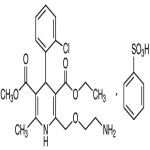
Amlodipine Besilate or Amlodipine Besylate Structure
CAS Number 111470-99-6, Amlodipine Besilate or Amlodipine Besylate Manufacturer Exporter
ANMOL CHEMICALS INDUSTRIES Pvt. Ltd.
India, USA, Europe, UAE
TELEPHONE: 91-22-65290110
Navi Mumbai, INDIA
e-mail: info(At the rate i.e. @)anmol.org
Copyright. 23-may-26
We manufacture: