CAS Number 9004-65-3, Hypromellose or Hydroxypropyl Methylcellulose or HPMC IP BP EP Ph Eur USP JP FCC Food Grade Manufacturers Exporters
 ------


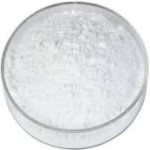
CAS Number 9004-65-3, Hypromellose or Hydroxypropyl Methylcellulose or HPMC IP BP EP Ph Eur USP JP FCC Food Grade Manufacturer Exporter
For Properties Specifications of Hypromellose or Hydroxypropyl Methylcellulose or HPMC Click Properties, Specifications of Hypromellose or Hydroxypropyl Methylcellulose or HPMC Manufacturer.
For Uses of Hypromellose or Hydroxypropyl Methylcellulose or HPMC Click Uses of Hypromellose or Hydroxypropyl Methylcellulose or HPMC Manufacturer.
For For SDS MSDS Sheet of Hypromellose or Hydroxypropyl Methylcellulose or HPMC Click SDS Safety Data Sheet MSDS Sheet of Hypromellose or Hydroxypropyl Methylcellulose or HPMC Manufacturer.
The Properties and Specifications of Hypromellose or Hydroxypropyl Methylcellulose or HPMC:
Specifications of Hypromellose USP Grade:
Cellulose, 2-hydroxypropyl methyl ether;
Cellulose hydroxypropyl methyl ether --- CAS 9004-65-3.
UNII: 3NXW29V3WO
DEFINITION
Hypromellose is a methyl and hydroxypropyl mixed ether of cellulose. It contains, calculated on the dried basis, methoxy (– OCH3 : 31.03) and hydroxypropoxy (– OC3H6OH: 75.09) groups conforming to the limits for the types of Hypromellose (hydroxypropyl methylcellulose) set forth in the table below.
Substitution Type 1828; Methoxy% 16.5 to 20; Hydroxypropoxy% 23 to 32
Substitution Type 2208; Methoxy% 19.0 to 24; Hydroxypropoxy% 4 to 12
Substitution Type 2906; Methoxy% 27.0 to 30; Hydroxypropoxy% 4 to 7.5
Substitution Type 2910; Methoxy% 28.0 to 30; Hydroxypropoxy% 7 to 12
IDENTIFICATION
A.
Sample: 1 g
Analysis: Gently add the Sample to the top of 100 mL of water in a beaker, and allow to disperse over the surface, tapping the top of the container to ensure an even dispersion of the substance. Allow the beaker to stand for 1–2 min.
Acceptance criteria: The powdered material aggregates on the surface.
B.
Sample: 1 g
Analysis: Add the Sample to 100 mL of boiling water, and stir the mixture using a magnetic stirrer with a bar 25-mm long.
Acceptance criteria: A slurry is formed, but the powdered material does not dissolve. Cool the slurry to 10C and stir using a magnetic stirrer: the resulting liquid is a clear or slightly turbid solution with thickness dependent on the viscosity grade.
C.
Solution A: Sulfuric acid and water (9 in 10). [Note— Carefully add sulfuric acid to water. ]
Sample solution: 0.1 mL of the solution prepared for Identification test B
Analysis: To the Sample solution add 9 mL of Solution A, and shake. Heat in a water bath for exactly 3 min, immediately cool in an ice bath, and add carefully 0.6 mL of ninhydrin. Shake and allow to stand at 25C.
Acceptance criteria: A red color develops at first that changes to purple within 100 min.
D.
Sample solution: 2–3 mL of the solution prepared for Identification test B
Analysis: Pour the Sample solution onto a glass slide as a thin film, and allow the water to evaporate.
Acceptance criteria: A coherent, clear film forms on the glass slide.
E.
Sample solution: 50 mL of the solution prepared in Identification test B
Analysis: Add the Sample solution to exactly 50 mL of water in a beaker. Insert a thermometer into the solution. Stir the solution on a magnetic stirrer/hot plate and begin heating at a rate of 2C –5C/min. Determine the temperature at which a turbidity increase begins to occur, and designate this temperature as the flocculation temperature.
Acceptance criteria: The flocculation temperature is higher than 50C.
Residue on Ignition:
Sample: 1.0 g
Acceptance criteria: NMT 1.5%
pH:
Sample: Use the solution prepared in the tests for Viscosity.
Analysis: Read the indicated pH value after the probe has been immersed for 5 ± 0.5 min.
Acceptance criteria: 5.0–8.0
Loss on Drying:
Sample: 1.0 g
Analysis: Dry the Sample at 105° for 1 h.
Acceptance criteria: NMT 5.0%
Viscosity: To pass the test.
Acceptance criteria: 75%–140% of the viscosity stated on the label
Packaging and Storage: Preserve in well-closed containers. No storage requirements are specified.
Labeling: Label it to indicate its substitution type and its nominal viscosity value in millipascals per second (mPa·s).
Specifications of Hypromellose BP Ph Eur Grade:
CAS 9004-65-3
DEFINITION
Hydroxypropylmethylcellulose. Cellulose, 2-hydroxypropylmethyl ether. Partly O-methylated and O-(2-hydroxypropylated) cellulose.
Content: Methoxy (-OCH3; Mr 31.03) and hydroxypropoxy (-OC3H6OH; Mr 75.09) groups (dried substance) conforming to the types of hypromellose set forth in the accompanying table.
CHARACTERS
Appearance: White, yellowish-white or greyish-white powder or granules, hygroscopic after drying.
Solubility: Practically insoluble in hot water, in acetone, in anhydrous ethanol and in toluene. It dissolves in cold water giving a colloidal solution.
IDENTIFICATION
A. Evenly distribute 1.0 g onto the surface of 100 mL of water in a beaker, tapping the top of the beaker gently, if necessary, to ensure a uniform layer on the surface. Allow to stand for 1-2 min: the powdered material aggregates on the surface.
B. Evenly distribute 1.0 g into 100 mL of boiling water, and stir the mixture using a magnetic stirrer with a bar 25 mm long: a slurry is formed and the particles do not dissolve. Allow the slurry to cool to 10C and stir using a magnetic stirrer: a clear or slightly turbid solution occurs with its thickness dependent on the viscosity grade.
C. To 0.1 mL of the solution obtained in identification test B add 9 mL of a 90 per cent V/V solution of sulfuric acid, shake, heat on a water-bath for exactly 3 min, immediately cool in an ice-bath, carefully add 0.6 mL of a 20 g/L solution of ninhydrin, shake and allow to stand at 25C: a red colour develops at first and changes to purple within 100 min.
D. Place 2-3 mL of the solution obtained in identification test B onto a glass slide as a thin film and allow the water to evaporate: a coherent, clear film forms on the glass slide.
E. Add 50.0 mL of the solution obtained in identification test B to 50.0 mL of water in a beaker. Insert a thermometer into the solution. Stir the solution on a magnetic stirrer/hot plate and begin heating, increasing the temperature at a rate of 2-5C per minute. Determine the temperature at which a turbidity increase begins to occur and designate the temperature as the flocculation temperature: the flocculation temperature is higher than 50C.
TESTS
Appearance of solution: The solution is not more opalescent than reference suspension III and not more intensely coloured than reference solution.
While stirring, introduce a quantity of the substance to be examined equivalent to 1.0 g of the dried substance into 50 g of carbon dioxide-free water heated to 90C. Allow to cool, adjust the mass of the solution to 100 g with carbon dioxide-free water and stir until dissolution is complete.
pH: 5.0 to 8.0 for the solution prepared as described under Viscosity. Read the indicated pH value after the probe has been immersed for 5 ± 0.5 min.
Viscosity: 80 per cent to 120 per cent of the nominal value for samples with a viscosity less than 600 mPa⋅s; 75 per cent to 140 per cent of the nominal value for samples with viscosity of 600 mPa⋅s or higher.
Loss on drying: Maximum 5.0 per cent, determined on 1.000 g by drying in an oven at 105C for 1 h.
Sulfated ash: Maximum 1.5 per cent, determined on 1.0 g.
LABELLING
The label states:
— the nominal viscosity in millipascal seconds (mPa⋅s);
— the substitution type.
Specifications of Hydroxypropyl Methylcellulose FCC Food Grade:
Propylene Glycol Ether of Methylcellulose; Modified Cellulose, HPMC
INS: 464 CAS: [9004-65-3]
DESCRIPTION
Hydroxypropyl Methylcellulose occurs as a white to off-white, fibrous powder or as granules. It is the propylene glycol ether of methylcellulose in which both the hydroxypropyl and the methyl groups are attached to the anhydroglucose rings of cellulose by ether linkages. Several product types are available that are defined by varying combinations of methoxyl and hydroxypropoxyl content. It is soluble in water and in certain organic solvent systems. Aqueous solutions are surface active, form films upon drying, and undergo a reversible transformation from sol to gel upon heating and cooling, respectively.
Function: Thickening agent; stabilizer; emulsifier.
REQUIREMENTS
Identification:
A. Add 1 g of sample to 100 mL of water. It swells and disperses to form a clear to opalescent, mucilaginous solution, depending on the intrinsic viscosity, which is stable in the presence of most electrolytes.
B. Add 1 g of sample to 100 mL of boiling water, and stir the mixture. A slurry forms that when cooled to 20C, dissolves to form a clear or opalescent, mucilaginous solution.
C. Pour a few milliliters of the solution prepared for Identification Test B onto a glass plate and allow the water to evaporate. A thin, self-sustaining film forms.
Assay for Hydroxypropoxyl Groups: Between a minimum of 3.0% and a maximum of 12.0% of hydroxypropoxyl groups (-OCH2CHOHCH3), within the range claimed by the vendor for any product type.
Assay for Methoxyl Groups: Between a minimum of 19.0% and a maximum of 30.0% of methoxyl groups (-OCH3), within the range claimed by the vendor for any product type.
Lead: Not more than 3 mg/kg.
Loss on Drying: Not more than 5.0%.
Residue on Ignition: Not more than 1.5% for products with viscosities of 50 centipoises or above; not more than 3.0% for products with viscosities below 50 centipoises.
Viscosity: The viscosity of an aqueous solution containing 2 g of sample per 100 g of solution is not less than 80.0% and not more than 120.0% of that stated on the label for viscosity types of 100 centipoises or less, and not less than 75.0% and not more than 140.0% of that stated on the label for viscosity types higher than 100 centipoises.
We also manufacture Hypromellose IP EP JP grade.
The Uses of Hypromellose or Hydroxypropyl Methylcellulose or HPMC:
Hydroxypropyl Methylcellulose or Hydroxypropyl Methyl Cellulose or HPMC is non-ionic cellulose ether made from natural cotton fiber under series of chemical processing. It’s odorless, tasteless and non-toxic white powder, can be dissolved in cold water to form a transparent viscous solution with the properties of thickening, binding, dispersing, emulsifying, film coating, suspending, absorbing, gelling, water retention and colloid protection. It used in oharmaceutical formulations.
The MSDS-SDS Hazard Statement of Hypromellose or Hydroxypropyl Methylcellulose or HPMC:
Hydroxypropyl Methylcellulose or Hydroxypropyl Methyl Cellulose or HPMC or Hypromellose SDS GHS, Safety Data Sheet
MSDS
Section 1: Chemical Product and Company Identification
Product Name & Other Names: Hydroxypropyl Methylcellulose or Hydroxypropyl Methyl Cellulose or HPMC or Hypromellose.
CAS Number: 9004-65-3
EINECS EC Code: 618-389-6
Relevant uses and uses advised against (if any): Industrial Manufacturing.
Suppliers: As per letterhead.
Section 2: Hazards Identification
GHS, Globally Harmonized System Classification in accordance with 29 CFR 1910
Hazard Class and Category Code(s), Regulation (EC) No 1272/2008 (CLP)
Not a hazardous substance or mixture according to Regulation (EC) No. 1272/2008.
This substance is not classified as dangerous according to Directive 67/548/EEC.
Labeling Regulation as per GHS & EC 1272/2008 (CLP) & GHS
GHS Label Elements NONE |
Signal Word: None
Precautionary statements:
P261: Avoid breathing dust/fume/gas/mist/vapors/spray.
P262: Do not get in eyes, on skin, or on clothing.
P281: Use personal protective equipment as required.
P302+P352: IF ON SKIN: Wash with plenty of soap and water.
P303+P361+P353: IF ON SKIN (or hair): Remove/Take off immediately all contaminated clothing. Rinse skin with water/shower.
P304+P340: IF INHALED: Remove victim to fresh air and keep at rest in a position comfortable for breathing.
P305+P351+P338: IF IN EYES: Rinse cautiously with water for several minutes. Remove contact lenses, if present and easy to do. Continue rinsing.
P337+313: If eye irritation persists get medical advice/attention.
Section 3: Composition and Information on Ingredients
Product Name & Other Names: Hydroxypropyl Methylcellulose or Hydroxypropyl Methyl Cellulose or HPMC or Hypromellose.
CAS Number: 9004-65-3
EINECS EC Code: 618-389-6
Section 4: First Aid Measures
Always seek medical advice after the first aid treatment.
Skin: Rinse with water. Soap may be used. Seek Medical Aid.
Eyes: Wash eyes with plenty of water for at least 15 minutes, lifting lids occasionally. Seek Medical Aid.
Inhalation: Remove to fresh air. If not breathing, give artificial respiration. If breathing is difficult, give oxygen.
Ingestion: If swallowed, induce vomiting immediately after giving two glasses of water. Never give anything by mouth to an unconscious person.
Section 5: Fire and Explosion Data
Products of Combustion: Oxides of Carbon.
Fire Fighting Media and Instructions: Use water spray, alcohol-resistant foam, dry chemical or carbon dioxide. Wear self-contained breathing apparatus for firefighting if necessary.
Special Information: In the event of a fire, wear full protective clothing and NIOSH-approved self-contained breathing apparatus with full face piece operated in the pressure demand or other positive pressure mode. At high temperatures under fire conditions, it may produce toxic or irritating fumes.
Section 6: Accidental Release Measures
Personal precautions, protective equipment and emergency procedures: Avoid breathing dust/fumes/gas/mist/vapors/spray. Ensure adequate ventilation. Use individual protective equipment (waterproof boots, suitable protective clothing, safety glasses, etc.). Restrict unprotected personnel from the area. Prevent any contact with hot surfaces. Do not approach facing the wind. Do not touch the spilled material.
Environmental precautions: Do not let the product enter drains, soil or water sources.
Methods and materials used for containment Cleanup procedures and Storage:
Large Spill: Contain spilled material. Do not inhale vapors, mist, or gas. Avoid dust formation. Use a shovel to put the material into a convenient waste disposal container.
Section 7: Handling and Storage
Precautions for safe handling: Apply according to good manufacturing and industrial hygiene practices. Ensure proper ventilation. Wash thoroughly after handling. Do not drink, eat or smoke while handling. Avoid contact with skin, eyes and clothing. Minimize dust generation. Avoid breathing dust/fumes/gas/mist/vapors/spray. Keep container tightly closed. Avoid ingestion and inhalation. Use individual protective equipment (waterproof boots, suitable protective clothing, safety glasses, etc.).
Conditions for safe storage, including any incompatibilities: Store in cool, dry and ventilated area away from heat sources and protected from sunlight in tightly closed original container. Keep air contact to a minimum. Do not leave the material container open. Store protected from heat, sparks and ignition sources and incompatible materials. Avoid inhalation of dust/mist/vapor. Do not store with incompatible materials like oxidizing agents, acids.
Section 8: Exposure Controls/Personal Protection
Exposure Guidelines: This product does not contain any hazardous materials with occupational exposure limits established by the region-specific regulatory bodies.
Engineering Controls: Use process enclosures, local exhaust ventilation, or other engineering controls to keep airborne levels below recommended exposure limits. If user operations generate dust, fume or mist, use ventilation to keep exposure to airborne contaminants low.
Ventilation System: A system of local and/or general exhaust is recommended to keep employee exposures as low as possible. Local exhaust ventilation is generally preferred because it can control the emissions of the contaminant at its source, preventing dispersion of it into the general work area.
Personal Respirators (NIOSH Approved): For conditions of use where exposure to dust or mist is apparent and engineering controls are not feasible, a particulate respirator may be worn. For emergencies or instances where the exposure levels are not known, use a full-face positive-pressure, air-supplied respirator.
Skin Protection: Wear protective gloves and clean body-covering clothing.
Eye Protection: Use chemical safety goggles and/or full face shield where dusting or splashing of solutions is possible. Maintain eye wash fountain and quick-drench facilities in work area.
Other Control Measures: Maintain good housekeeping in work area. Dust deposits on floors and other surfaces may pick up moisture and cause the surfaces to become slippery and present safety hazards. Handle in accordance with good industrial hygiene and safety practice.
Section 9: Physical and Chemical Properties
Physical state and appearance: White to off-white powder.
Odor: Odorless.
Odor threshold: Not applicable.
pH: 5 to 8.
Relative density: No data found.
Melting point/freezing point: No data found.
Initial boiling point and boiling range: No data found.
Flash point: No data found.
Auto-ignition temperature: No data found.
Decomposition temperature: No data found.
Upper/lower flammability or explosive limits: No data found.
Vapor pressure: No data found.
Vapor density: No data found.
Evaporation rate: No data found.
Flammability (solid, gas): No data found.
Partition coefficient: n-octanol/water: No data found.
Solubility: Soluble in cold water.
Viscosity: Varies as per label.
Section 10: Stability and Reactivity Data
Stability: It is stable in room temperature in closed containers under normal storage & handling.
Conditions of instability: Incompatible materials, Strong oxidizers. May react vigorously with bleaching powder, Fluorine, Nitric acid.
Incompatibility with various substances: Avoid high temperatures, sparks, open flames and moisture. Avoid contact with strong oxidizing agents.
Polymerization: Will not occur.
Section 11: Toxicological Information
LD50 Oral – Mammal: > 10.000 mg/kg>
LD50 Intraperitoneal – Rat: 5.200 mg/kg
LD50 Oral - Rat: No data found.
Carcinogenic Effects: Not a reported carcinogen by IARC, NTP, ACGIH, OSHA.
Reproductive toxicity: No data found.
Teratogenicity: No data found.
Developmental Effects: No data found.
The toxicological properties have not been fully investigated.
Section 12: Ecological Information
Toxicity to fish: No data found.
BOD5 and COD: No data found.
Persistence and Degradability: Soluble in water and hence may not persist.
Bioaccumulation/ Accumulation: No data found.
Mobility: Is likely mobile in the environment due its water solubility.
Section 13: Disposal Considerations
Waste Disposal: Waste must be disposed of in accordance with federal, state and local environmental control regulations.
Section 14: Transport Information
DOT USA, TDG Canada & ADR/RID Europe: Not controlled.
IMDG: Not controlled.
IATA: Not controlled.
Section 15: Other Regulatory Information
USA Regulations:
SARA 311/312 Hazard Categories: None.
California Prop 65: Nott are listed.
Section 16 - Additional Information
Disclaimer:
**************************
Our company provides this MSDS sheet in good faith but makes no representation as to its comprehensiveness or accuracy. This SDS sheet is intended only as a guide to the appropriate precautionary handling of the material by a properly trained person using this product. The above information has been compiled from various sources and has the possibility of discrepancy and being out-dated information. Individuals receiving the information must exercise their independent judgment and do further search in determining its appropriateness for a particular purpose. In no case shall our company be liable to loss or damages by the product user.
**************************
Anmol Chemicals Industries Pvt. Ltd. is an off-shoot of Anmol Chemicals and Anmol Chemicals & Pharmaceuticals, Taloja. It is located in MIDC Taloja and it is manufacturing pharmaceutical grades of API, Excepients, Food grade and Reagent grade chemicals. Anmol Chemicals Industries Pvt. Ltd. is a several decades old group of companies, engaged in manufacturing, supplying, distributing, wholesale supplies for actual users, retail or small pack supplies for research and development chemicals, fine and speciality chemicals, pharmaceutical excipients, mineral fortifiers in chemically pure, Analytical reagent grade, IP BP USP Ph Eur EP JP and other pharmaceutical grade monograph including FCC Food grade chemicals and Nutraceuticals, Mineral Fortifiers at best prices.
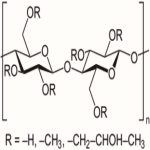
Hypromellose or Hydroxypropyl Methylcellulose or HPMC Structure
CAS Number 9004-65-3, Hypromellose or Hydroxypropyl Methylcellulose or HPMC Manufacturer Exporter
ANMOL CHEMICALS INDUSTRIES Pvt. Ltd.
India, USA, Europe, UAE
TELEPHONE: 91-22-65290110
Navi Mumbai, INDIA
e-mail: info(At the rate i.e. @)anmol.org
Copyright. 26-may-26
We manufacture:
Hypromellose or Hydroxypropyl Methylcellulose or HPMC
Hypromellose Phthalate or Hydroxypropyl Methycellulose Phthalate