CAS Number 83-88-5, Riboflavin Vitamin B2 USP BP Ph Eur FCC Food Grade Manufacturers Exporters
 ------


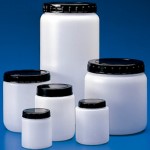
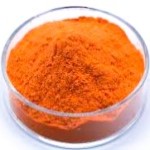
CAS Number 83-88-5, Riboflavin Vitamin B2 USP BP Ph Eur FCC Food Grade Manufacturer Exporter
For Properties Specifications of Riboflavin Vitamin B2 Click Properties, Specifications of Riboflavin Vitamin B2 Manufacturer.
For Uses of Riboflavin Vitamin B2 Click Uses of Riboflavin Vitamin B2 Manufacturer.
For For SDS MSDS Sheet of Riboflavin Vitamin B2 Click SDS Safety Data Sheet MSDS Sheet of Riboflavin Vitamin B2 Manufacturer.
The Properties and Specifications of Riboflavin Vitamin B2:
Riboflavin USP Grade Specifications:
C17H20N4O6 376.36
Riboflavine CAS 83-88-5
UNII: TLM2976OFR
DEFINITION
Riboflavin contains NLT 98.0% and NMT 102.0% of riboflavin (C17H20N4O6), calculated on the dried basis.
IDENTIFICATION
A. Color and Fluorescence of Solution:
Sample solution: 0.01 mg/mL in water
Analysis: Alternately expose to transmitted light and long-wavelength UV light.
Acceptance criteria: The Sample solution is pale greenish yellow by transmitted light. By reflected light, it exhibits an intense yellowish-green fluorescence that disappears upon the addition of mineral acids or alkalies.
Residue on Ignition: NMT 0.3%
Limit of Lumiflavin: To pass the test.
Optical Rotation, Specific Rotation:
Sample solution: 5 mg/mL in 0.05 M carbonate-free sodium hydroxide.
Analysis: Measure the specific rotation within 30 min of preparation.
Acceptance criteria: −115° to −135°
Loss on Drying: Dry 500 mg at 105C for 2 h. It loses NMT 1.5% of its weight.
Riboflavin BP Ph Eur Grade Specifications:
C17H20N4O6 --- 376.4 CAS 83-88-5
Action and use: Vitamin B2.
DEFINITION
7,8-Dimethyl-10-[(2S,3S,4R)-2,3,4,5-tetrahydroxypentyl]benzo[g]pteridine-2,4(3H,10H)-dione.
This monograph applies to riboflavin produced by fermentation.
Content: 97.0 per cent to 103.0 per cent (dried substance).
CHARACTERS
Appearance: Yellow or orange-yellow, crystalline powder.
Solubility: Very slightly soluble in water, practically insoluble in ethanol (96 per cent).
Solutions deteriorate on exposure to light, especially in the presence of alkali.It shows polymorphism.
IDENTIFICATION
A. Specific optical rotation.
B. Thin-layer chromatography.
C. Dissolve about 1 mg in 100 mL of water. The solution has, by transmitted light, a pale greenish yellow colour, and, by reflected light, an intense yellowish-green fluorescence which disappears on the addition of mineral acids or alkalis.
Specific optical rotation: -115 to -135 (dried substance).
Dissolve 50.0 mg in 0.05 M sodium hydroxide free from carbonate and dilute to 10.0 mL with the same alkaline solution. Measure the optical rotation within 30 min of dissolution.
Absorbance:
Test solution Dilute the final solution prepared for the assay with an equal volume of water.
Absorption maxima at 223 nm, 267 nm, 373 nm and 444 nm.
Absorbance ratios:
— A373/A267 = 0.31 to 0.33;
— A444/A267 = 0.36 to 0.39.
Related substances: To pass the test.
Loss on drying: Maximum 1.5 per cent, determined on 1.000 g by drying in an oven at 105C.
Sulfated ash: Maximum 0.1 per cent, determined on the residue obtained in the test for loss on drying.
Riboflavin FCC Food Grade Specifications:
Vitamin B2
C17H20N4O6 Formula weight 376.37
INS: 101(i) CAS 83-88-5
DESCRIPTION
Riboflavin occurs as a yellow to orange-yellow, crystalline powder. When dry, it is not affected by diffused light, but when in solution, light induces deterioration. It melts at about 280° with decomposition, and its saturated solution is neutral to litmus. One-gram dissolves in 3000 to about 20,000 mL of water, the variations being due to differences in the internal crystalline structure. It is less soluble in alcohol than in water. It is insoluble in ether and in chloroform, but it is very soluble in dilute solutions of alkalis.
Function: Nutrient.
REQUIREMENTS
Identification: A solution of 1 mg of sample in 100 mL of water is pale green-yellow by transmitted light and has an intense yellow-green fluorescence that disappears on the addition of mineral acids or alkalies.
Assay: Not less than 98.0% and not more than 102.0% of C17H20N4O6, calculated on the dried basis.
Loss on Drying: Not more than 1.5%.
Lumiflavin: Passes test.
Optical (Specific) Rotation: [α]D25°: Between +56.5° and +59.5°, calculated on the dried basis.
Residue on Ignition: Not more than 0.3%.
The Uses of Riboflavin Vitamin B2:
Riboflavin, also known as vitamin B2, is a vitamin used in food and sold as a dietary supplement. Riboflavin or Vitamin B2 is one of the B vitamins, which are all water soluble. Riboflavin is naturally present in some foods, added to some food products, and available as a dietary supplement. In foods it has an E number of E101, E101(iii)
The MSDS-SDS Hazard Statement of Riboflavin Vitamin B2:
Riboflavin or Vitamin B2 SDS Sheet, Safety Data Sheet
MSDS
1. Product Identification
Product Name & Other Names: Riboflavin or Vitamin B2.
CAS No.: 83-88-5
EINECS EC Code: 201-507-1
Relevant uses and uses advised against (if any): Industrial Manufacturing.
SUPPLIER: As per letterhead.
2. Hazards Identification
GHS, Globally Harmonized System Classification in accordance with 29 CFR 1910
Classification according to Regulation (EC) No 1272/2008
Not a hazardous substance or mixture according to Regulation (EC) No. 1272/2008.
This substance is not classified as dangerous according to Directive 67/548/EEC.
Labeling according to GHS & Regulation (EC) No 1272/2008
| GHS Label Elements NONE |
Signal Words: None
Precautionary statements:
P261: Avoid breathing dust/fume/gas/mist/vapors/spray.
P262: Do not get in eyes, on skin, or on clothing.
P281: Use personal protective equipment as required.
P302+P352: IF ON SKIN: Wash with plenty of soap and water.
P304+P340: IF INHALED: Remove victim to fresh air and keep at rest in a position comfortable for breathing.
P305+P351+P338: IF IN EYES: Rinse cautiously with water for several minutes. Remove contact lenses, if present and easy to do. Continue rinsing.
3. Composition/Information on Ingredients
Product Name & Other Names: Riboflavin or Vitamin B2.
CAS No.: 83-88-5
EINECS EC Code: 201-507-1
4. First Aid Measures
Always seek medical advice after the first aid treatment.
Inhalation: If inhaled, remove to fresh air. If not breathing, give artificial respiration. If breathing is difficult, give oxygen. Get medical attention.
Ingestion: Contact medical center quickly. Never give anything by mouth to an unconscious person. Get medical attention.
Skin Contact: Immediately flush skin with plenty of water for at least 15 minutes. Remove contaminated clothing and shoes. Get medical attention. Wash clothing before reuse. Thoroughly clean shoes before reuse.
Eye Contact: Check for and remove any contact lenses. Immediately flush your eyes with running water for at least 15 minutes, keeping eyelids open. Cold water may be used. Get medical attention.
5. Fire Fighting Measures
Combustible at high temperature. High heat or direct flame is necessary to cause ignition. Toxic fumes, carbon monoxide and nitrogen oxides may be formed in fire.
Explosion: At high temperature, explosive vapor-air mixtures may be formed.
Fire Extinguishing Media: Dry chemical, foam, water spray or carbon dioxide. Do not use a solid stream of water since the stream will scatter and spread the fire. Water spray may be used to keep fire exposed containers cool.
Special Information: In the event of a fire, wear full protective clothing and NIOSH-approved self-contained breathing apparatus with full face piece operated in the pressure demand or other positive pressure mode. At high temperatures under fire conditions, it may produce toxic or irritating fumes. Fire-extinguishing work is done from the windward and a suitable fire-extinguishing method according to the surrounding situation is used. Uninvolved persons should evacuate to a safe place.
6. Accidental Release Measures
Personal precautions, protective equipment, and emergency procedures: Avoid breathing dust/fumes/gas/mist/vapors/spray. Use individual protective equipment (waterproof boots, suitable protective clothing, safety glasses, etc.). Restrict unprotected personnel from the area. Prevent any contact with hot surfaces. Do not approach facing the wind. Do not touch the spilled material.
Environmental precautions: Do not let the product enter drains, soil, or water sources.
Methods and materials used for containment cleanup procedures and Storage: Avoid dust formation. Keep away from heat. Keep away from sources of ignition. Provide ventilation. Contain spilled material. Cover with an inert, non-combustible absorbent material, (e.g., sand, earth, diatomaceous earth, vermiculite). Vacuum or sweep-up and remove to an approved disposal container.
7. Handling and Storage
Precautions for safe handling: Apply according to good manufacturing and industrial hygiene practices. Ensure proper ventilation. Wash thoroughly after handling. Do not drink, eat, or smoke while handling. Avoid contact with skin, eyes, and clothing. Minimize dust generation. Avoid breathing dust/fumes/gas/mist/vapors/spray. Keep container tightly closed. Avoid ingestion and inhalation. Use individual protective equipment (waterproof boots, suitable protective clothing, safety glasses, etc.). Prevent any contact with hot surfaces.
Conditions for safe storage, including any incompatibilities: Keep away from heat and source of fire. Store in cold, dry, and ventilated area away from heat sources and protected from sunlight in tightly closed original container. Keep air contact to a minimum. Do not breathe dust. Do not leave the material container open. Store protected from heat, sparks and ignition sources and incompatible materials. Avoid inhalation of dust/mist/vapor. Do not store with incompatible materials like oxidizing material. Storage: Room temperature. Preferably refrigerate. In a light resistance container.
8. Exposure Controls/Personal Protection
Airborne Exposure Limits: The product does not contain any relevant quantities of materials with critical values that have to be monitored at the workplace.
Ventilation System: A system of local and/or general exhaust is recommended to keep employee exposures as low as possible. Local exhaust ventilation is preferred because it can control the emissions of the contaminant at its source, preventing dispersion of it into the general work area.
Personal Respirators (NIOSH Approved): For conditions of use where exposure to the substance is apparent and engineering controls are not feasible, consult an industrial hygienist. For emergencies, or instances where the exposure levels are not known, use a full-face piece positive-pressure, air-supplied respirator.
Skin Protection: Wear impervious protective clothing, including boots, gloves, lab coat, apron, or coveralls, as appropriate, to prevent skin contact.
Eye Protection: Use chemical safety goggles and/or a full-face shield where splashing is possible. Maintain eye wash fountain and quick-drench facilities in work area.
Other Control Measures: Maintain good housekeeping in work area. Handle in accordance with good industrial hygiene and safety practice.
9. Physical and Chemical Properties
Appearance: Orange yellow crystalline powder.
Odor: No data found.
Odor threshold: No data found.
pH: 5.5 - 7.2 for 0.07 g/l in water @ 20C.
Melting point: 280C to 290C literature..
Boiling point: 710C (Predicted).
Relative density: 1.65 (Predicted).
Flash point: No data found.
Auto-ignition temperature: No data found.
Decomposition temperature: No data found.
Upper/lower flammability or explosive limits: No data found.
Vapor pressure: No data found.
Vapor density: No data found.
Evaporation rate: No data found.
Flammability (solid, gas): No data found.
Partition coefficient: n-octanol/water: No data found.
Solubility: Very slightly soluble in water.
Viscosity: No data found.
Molecular Weight: 376.36
Chemical Formula: C17H20N4O6
10. Stability and Reactivity
Stability: Stable under ordinary conditions of use and storage.
Hazardous Decomposition Products: Carbon dioxide, carbon monoxide, nitrogen oxides and toxic fumes may form when heated to decomposition.
Hazardous Polymerization: Not reported. However, it can explode under certain conditions.
Incompatibilities: Strong oxidizing agents, heat, and sparks.
Conditions to Avoid: Heat, flames, sunlight, ignition sources and incompatibles.
11. Toxicological Information
LD50 Oral - Rat - >10000 mg/kg.
LC50 Inhalation - Rat - 4 h: >5.4 mg/l - dust/mist.
Carcinogenicity: No component of this product present at levels greater than or equal to 0.1% is identified as possible or confirmed human carcinogen by IARC, ACGIH, OSHA and NTP.
Teratogenic Effects: No data found.
Mutagenic Effects: No data found.
Developmental Toxicity: No data found.
Reproductive Effects: No data found.
12. Ecological Information
Toxicity to fish: static test LC50 - Danio rerio (zebra fish) - > 10.000 mg/l - 96 h
Toxicity to daphnia and other aquatic invertebrates: EC50 - Daphnia magna (Water flea) - > 47,4 mg/l - 48 h.
Mobility: No data found.
Biodegradability: Expected to be biodegradable
Results of PBT and vPvB assessment: No data found.
13. Disposal Considerations
Whatever cannot be saved for recovery or recycling should be managed in an appropriate and approved waste disposal facility. Processing use or contamination of this product may change the waste management options. State and local disposal regulations may differ from federal disposal regulations. Dispose of containers and unused contents in accordance with federal, state, and local requirements.
14. Transport Information
DOT USA & ADR/RID Europe: Not controlled.
IMDG/IMO: Not controlled.
IATA/ICAO: Not controlled.
15. Regulatory Information
USA:
SARA 311/312 Hazards: No hazards. See section 2.
California Prop. 65 Components: Not listed.
16. Other Information
Disclaimer:
**************************
Our company provides this MSDS sheet in good faith but makes no representation as to its comprehensiveness or accuracy. This SDS sheet is intended only as a guide to the appropriate precautionary handling of the material by a properly trained person using this product. The above information has been compiled from various sources and has the possibility of discrepancy and being out-dated information. Individuals receiving the information must exercise their independent judgment and do further search in determining its appropriateness for a particular purpose. In no case shall our company be liable to loss or damages by the product user.
**************************
Anmol Chemicals Industries Pvt. Ltd. is an off-shoot of Anmol Chemicals and Anmol Chemicals & Pharmaceuticals, Taloja. It is located in MIDC Taloja and it is manufacturing pharmaceutical grades of API, Excepients, Food grade and Reagent grade chemicals. Anmol Chemicals Industries Pvt. Ltd. is a several decades old group of companies, engaged in manufacturing, supplying, distributing, wholesale supplies for actual users, retail or small pack supplies for research and development chemicals, fine and speciality chemicals, pharmaceutical excipients, mineral fortifiers in chemically pure, Analytical reagent grade, IP BP USP Ph Eur EP JP and other pharmaceutical grade monograph including FCC Food grade chemicals and Nutraceuticals, Mineral Fortifiers at best prices.
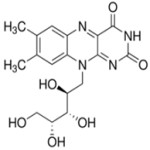
Riboflavin Vitamin B2 Structure
CAS Number 83-88-5, Riboflavin Vitamin B2 Manufacturer Exporter
ANMOL CHEMICALS INDUSTRIES Pvt. Ltd.
India, USA, Europe, UAE
TELEPHONE: 91-22-65290110
Navi Mumbai, INDIA
e-mail: info(At the rate i.e. @)anmol.org
Copyright. 25-may-26
We manufacture:
Biotin or Vitamin B7 0r Vitamin H
Calcium Ascorbate or Ascorbic Acid Calcium Salt